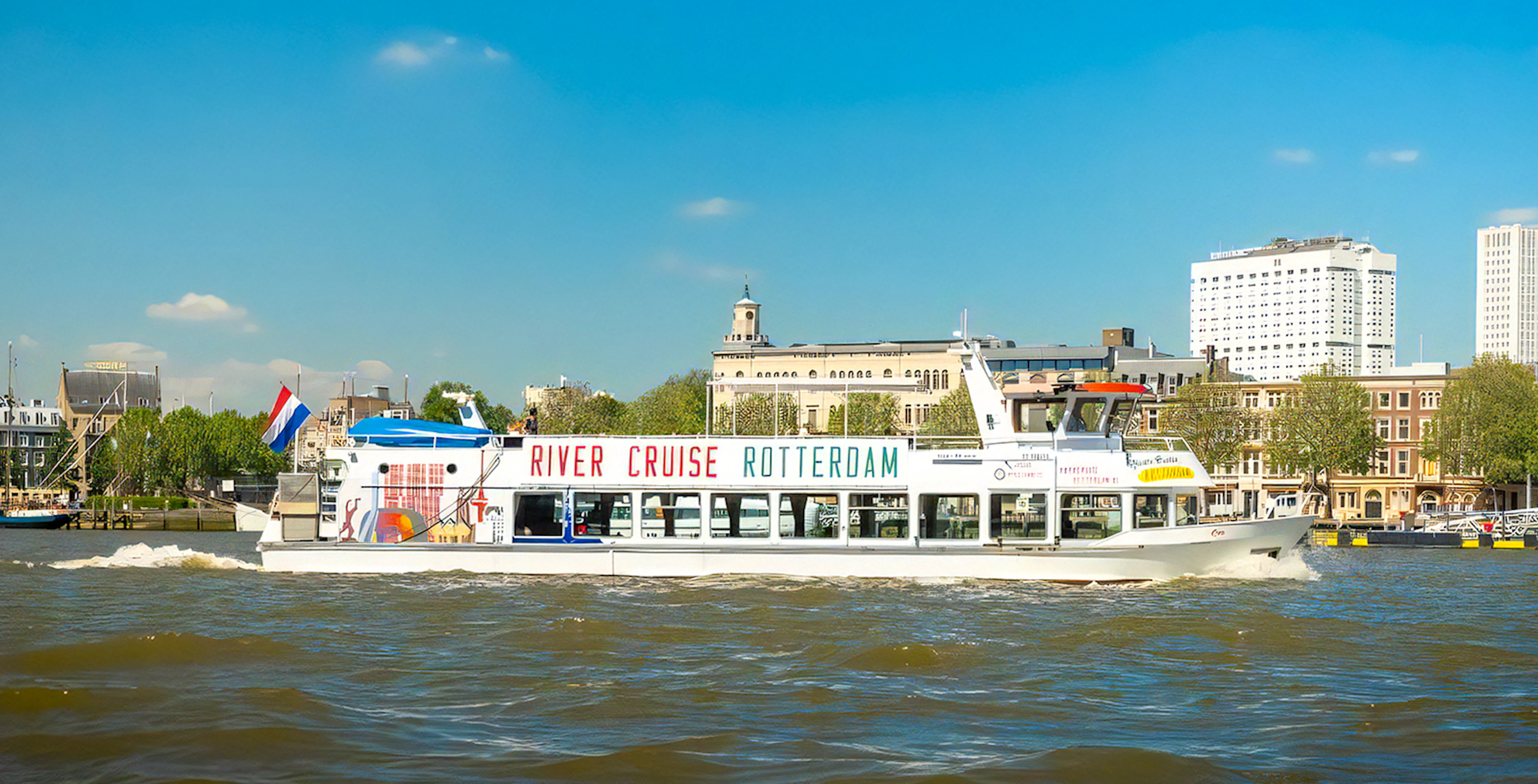
Sightseeing cruises operate daily year-round, typically scheduling departures every hour or two between 10am and 6pm. The standard sightseeing and pancake loops take 75 minutes, amphibious tours run for 60 minutes, and dedicated brewery runs extend up to 4 hours. Because these boats navigate protected inland waterways, weather cancellations are rare, though schedules may shift during extreme winter storms or dense fog.
What is a harbor cruise in Rotterdam?
A Rotterdam river cruise is an on-the-water sightseeing journey that navigates the broad Nieuwe Maas river to showcase Europe’s largest maritime port alongside the city’s post-war, avant-garde architectural skyline. Visitors board purpose-built vessels from centrally located piers like Willemsplein or Parkhaven to gain an immediate perspective on how global shipping networks intertwine with modern urban design. Tours typically run between 60 minutes and 4 hours, operating across indoor panoramic salons and open-air observation decks. The defining trait of this experience is the rare, close-up look it provides at active container terminals, shipyard cranes, and historic ocean liners, delivering a starkly industrial yet visually captivating alternative to typical European canal boat tours.
Why take a Rotterdam cruise?
1/4
A 75-minute industrial loop with zero language barriers
The ever-shifting port landscape relies on visual scale and dynamic engineering rather than verbal narration to make an impact. While audio commentaries explain key shipyards, international travelers can easily follow the route's visual progression and maritime action without needing to speak Dutch.
Modern observation decks put you close to active shipping lanes
Rotterdam's waterways carry massive global freight liners, tugboats, and water taxis simultaneously. Sitting on an open upper deck positions you within stone's throw of transiting cargo vessels, allowing you to hear the rumble of marine engines and watch port cranes move containers in real time.
The city's architectural identity is built around the river
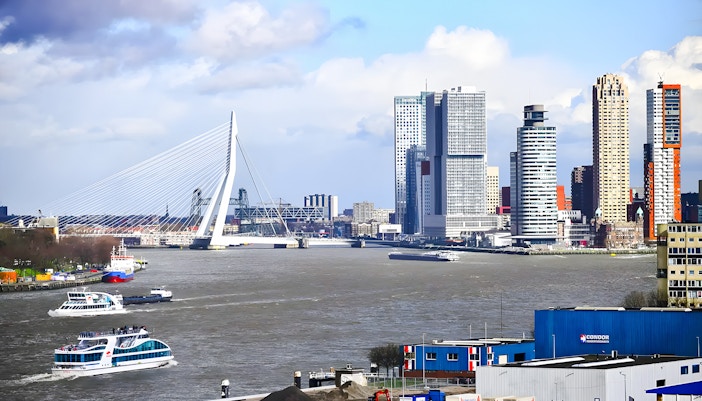
From the sweeping pylon of the Erasmus Bridge to the glass towers of the Wilhelminapier, Rotterdam's most famous landmarks face the water. Viewing these giant structures from a low river perspective emphasizes their scale and geometric design in a way that street-level walks cannot replicate.
Diverse vessel formats mean you must match your itinerary goals
Vessels vary from standard sightseeing hulls and family-focused pancake boats to high-speed amphibious buses. The onboard vibe changes completely depending on the craft you choose; choosing a themed dining boat means prioritizing casual food and a lively crowd over a quiet, photography-focused port tour.
Plan your visit to Nieuwe Maas River
Timetable
Best time to visit
Mid-morning slots between 10am and 12pm offer clear, high-contrast light that is ideal for photographing port shipyards and distant container cranes. Alternatively, booking a late afternoon departure roughly 45 minutes before sunset in the summer awards you views of the skyline glowing under golden hour light. Advance booking of 2 to 3 weeks is highly recommended for weekend pancake trips, whereas weekday sightseeing tickets can usually be booked 24 to 48 hours out. You can check the latest seasonal schedules on the Rotterdam cruises timings page.
Where to board
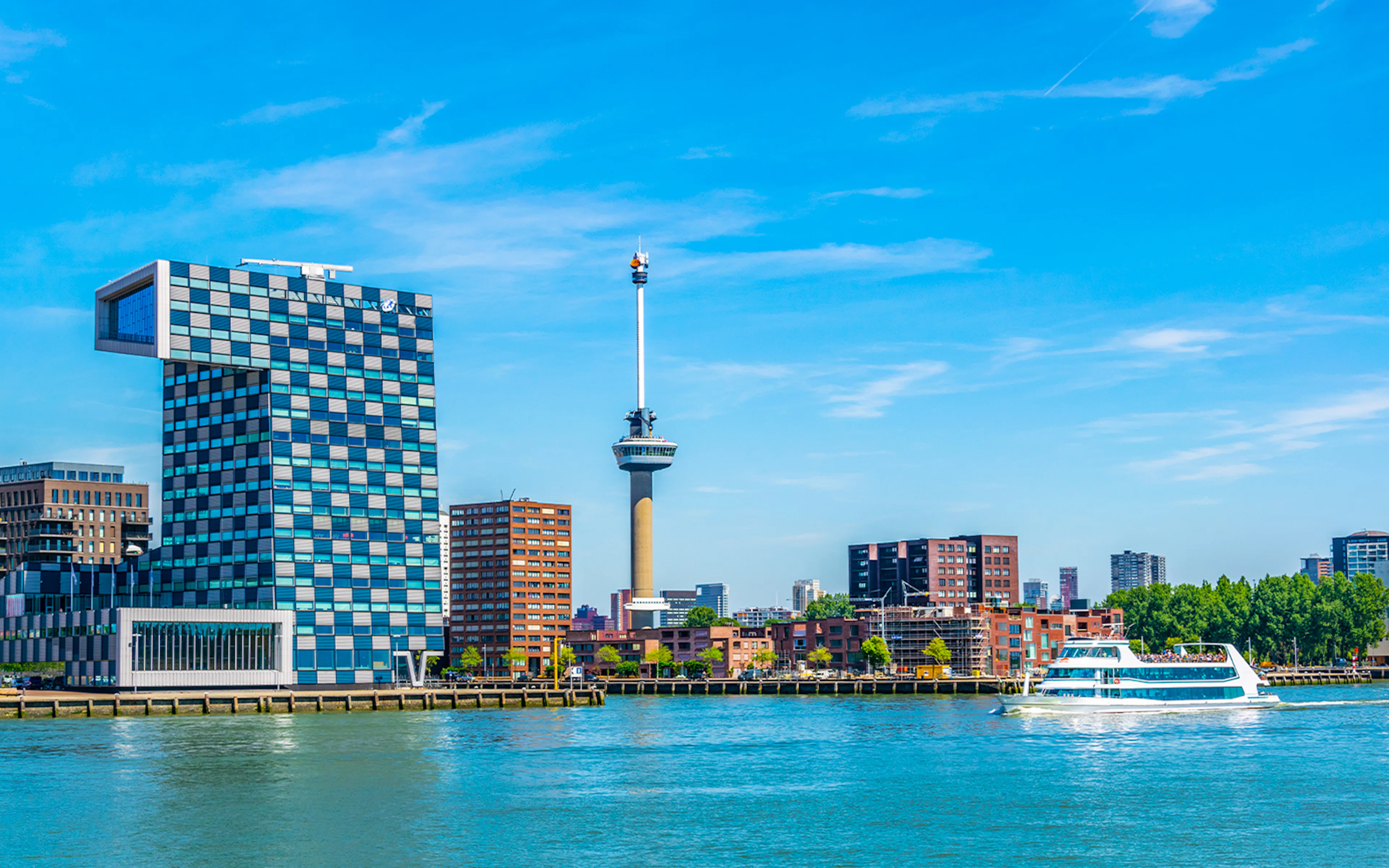
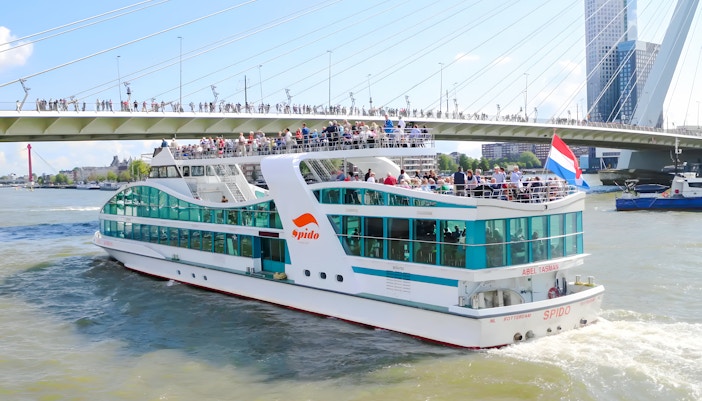
The primary boarding hub for standard harbor sightseeing is the Willemsplein Pier, positioned directly at the foot of the Erasmus Bridge. The dock is a 6-minute walk from the Leuvehaven Metro Station and a 4-minute walk from the Willemsplein Tram Stop. The pancake boat and Splashboat tours depart instead from the Parkhaven Pier next to the Euromast tower. You can pinpoint all exact departure gates on Google Maps.
What the Rotterdam cruise involves
Boarding under the Erasmus Bridge
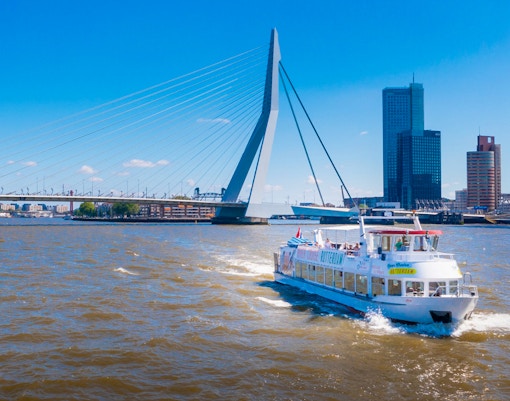
The experience begins at the pier gates, where digital tickets are scanned 15 minutes before departure. Guests step onto the wide main deck and choose between the climate-controlled glass salon or the wind-exposed upper observation deck. As the mooring lines are cast off, the vessel manoeuvres onto the open current of the Nieuwe Maas, instantly framing the 139-meter-high white pylon of the Erasmus Bridge.
Insider tip: Seating is entirely first-come, first-served on sightseeing routes, so board early if you want to secure an outside rail spot for unobstructed photography.
Cruising past the historic shipyards
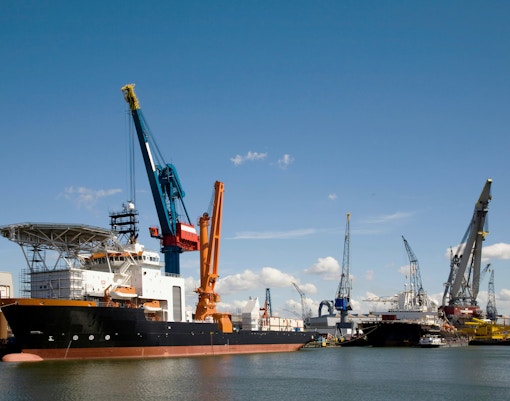
The boat heads west, leaving the downtown towers behind as it transitions into the working core of the port. Over the next 30 minutes, you glide past the historic docks of Sint Jobshaven, the expansive basins of Waalhaven, and the industrial Submarine Wharf. The audio guide introduces the engineering feats behind the port while massive floating dry docks and international cargo carriers dominate your view.
Insider tip: Wind speeds intensify significantly once the boat enters these open, unshaded harbor basins; keep a light jacket inside your day pack even during peak summer months.
Approaching the SS Rotterdam liner
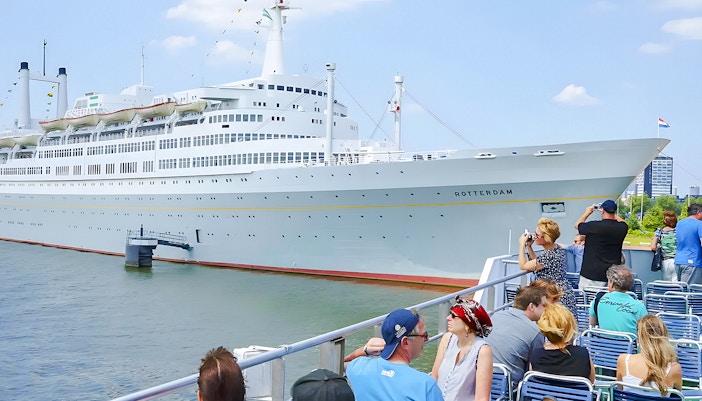
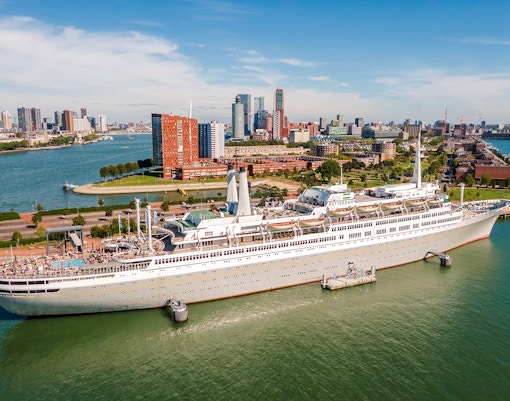
The vessel executes a wide, sweeping turn near the ocean-going container terminals to head back toward the city centre. The highlight of the return loop is an intimate pass along the hull of the SS Rotterdam, the famous 1950s former flagship of the Holland America Line that is now permanently moored as a floating hotel. The ship's classic white superstructures contrast sharply against the glassy towers of the nearby Katendrecht peninsula.
Insider tip: For the cleanest photos of the SS Rotterdam separating cleanly from the background skyline, stay on the starboard (right) side of the vessel during this stretch.
Tracking the Wilhelminapier skyscrapers
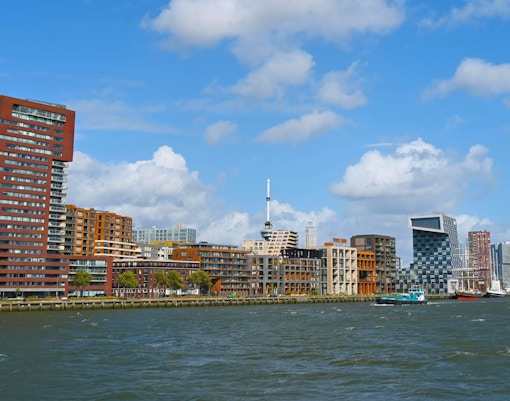
The final leg of the journey traces the edge of the Wilhelminapier, a modern architectural showcase often called 'Manhattan on the Maas'. You float directly beneath towering skyscrapers like De Rotterdam and the historic brick facade of Hotel New York. The boat glides through the water to complete its loop, gently bumping back against the Willemsplein dock exactly 75 minutes after departure.
Insider tip: To capture a perfectly symmetrical shot of the Erasmus Bridge cables forming a fan pattern above you, stand dead-center on the middle deck precisely as the boat glides underneath the span.
The context behind Rotterdam's harbor
Rotterdam's identity as a global maritime capital was forged by its geography at the mouth of the Rhine-Meuse-Scheldt delta, but its modern layout is the direct result of historical rebuilding. Following the near-total destruction of the historic city center and docks during the 1940 Rotterdam Blitz, the city abandoned traditional European architectural styles. Instead, it chose to rebuild with bold, experimental, and functional modern designs.
The port itself gradually migrated westward toward the North Sea to accommodate larger container ships, creating a vast 40-kilometer industrial corridor. Understanding that the unusual skyscrapers, bridges, and shipyards you see from the water were constructed as innovative solutions to post-war devastation, rather than simple cosmetic designs, completely reframes how you view the city's waterfront.
What to know before you go
Need to know
- Card payments only: Onboard snack counters, souvenir bars, and dockside ticket offices operate on a strict cashless basis; ensure you have a valid debit or credit card handy.
- Outside food policy: Bringing your own snacks, meals, or outside alcoholic beverages onto the vessels is prohibited; light refreshments are sold at the onboard bar.
- Accessibility variables: While the main decks and indoor salons are fully wheelchair accessible via standard dock ramps, reaching the open upper observation decks requires climbing narrow, steep marine stairs.
- Stroller restrictions: Families can bring strollers on board, but they must remain fully folded once inside seating rows, especially on busy Pancake Boat cruises, to keep emergency transit aisles clear.
Worth knowing
- Portside departure advantage: When launching from the Willemsplein pier, find a seat on the port (left) side of the boat to secure the best early views of the historic Veerhaven marina.
- Combine with nearby landmarks: The Parkhaven boarding dock sits directly at the base of the Euromast; pairing a morning tower ascent with an afternoon cruise creates an effortless, low-travel half-day itinerary.
- Summer sunset timing: If traveling in July or August, opt for a departure scheduled between 5pm and 6pm to catch the architectural pylons catching the final high-altitude rays while the lower districts fall into shadow.
Frequently asked questions about Rotterdam cruises
A Rotterdam cruise is famous for offering a close-up look at Europe's largest working industrial port alongside the city's modern architecture. It provides an efficient way to see iconic structures like the Erasmus Bridge and the historic SS Rotterdam liner from the water.
The best time to cruise is mid-morning for sharp photography of port operations, or late afternoon to catch the sunset glowing against the skyscrapers. Summer months offer warm breezes on the open observation decks, while winter trips feature heated indoor glass salons.
Yes, modern sightseeing vessels feature flat thresholds and wide boarding ramps that easily accommodate standard manual wheelchairs on the main deck and inside the panoramic salons. However, upper open decks and certain restroom doors on older hulls involve stairs or narrow entryways.
While standard 75-minute harbor sightseeing tickets can typically be secured 24 to 48 hours prior to departure, themed options like the all-you-can-eat pancake boat sell out weeks ahead.